The Globe Gallery, Wallsend
The Globe Gallery in Wallsend, North Tyneside, Newcastle, was a particularly interesting project for me. I was invited by the gallery’s director, Rashida Davidson, to create a series of works both in the gallery itself and at the Buddle Arts Centre.
The project combined two strands of my practice at that time: architectural intervention through wall cutting, and the deconstruction of everyday objects.
One of the works involved a timber-panelled wall within the gallery. Into this surface I cut a stark geometric form, removing the section from the wall and placing it directly onto the floor beneath. The gesture was both destructive and formal, transforming part of the architecture into an object in its own right.
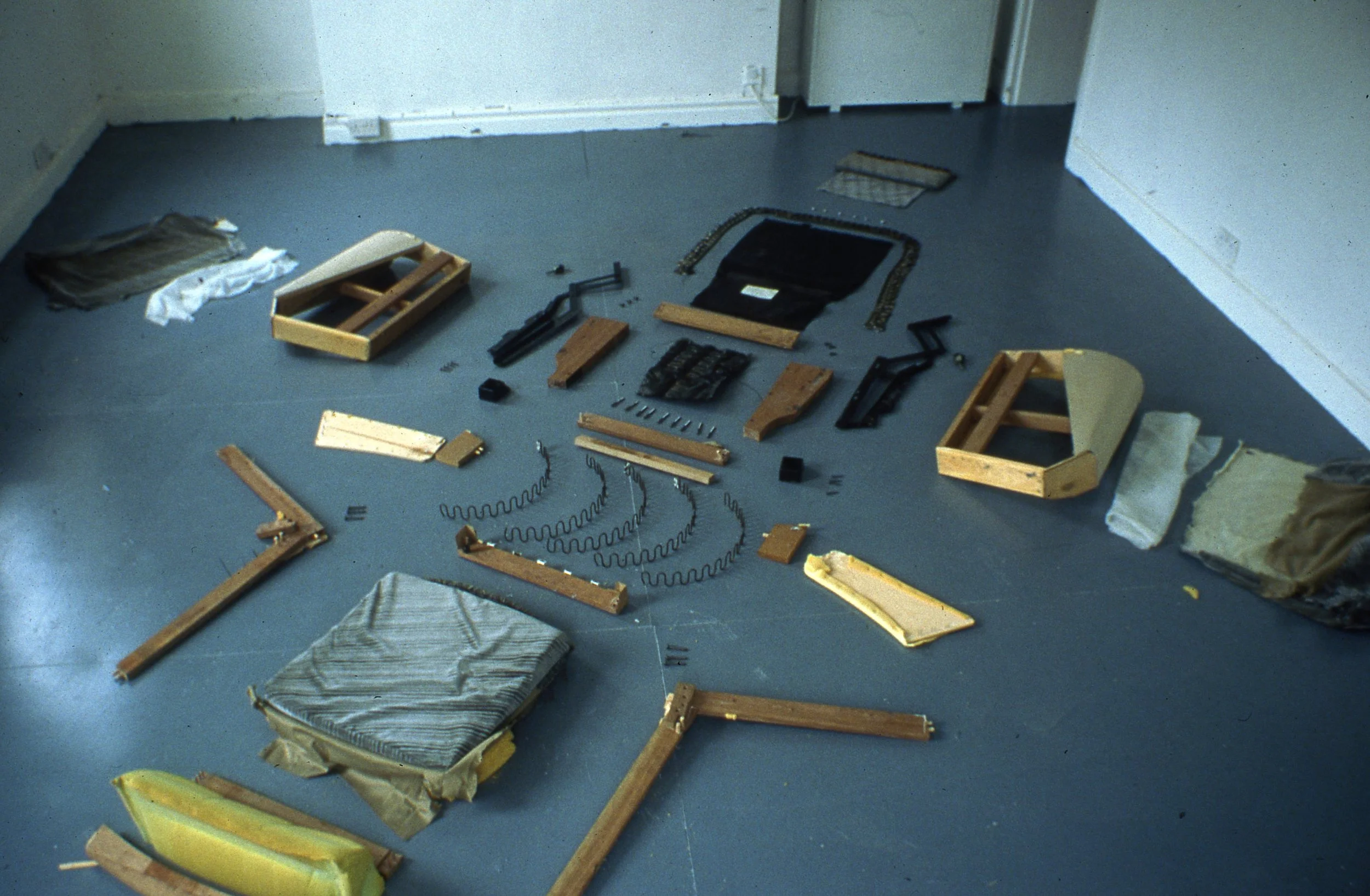
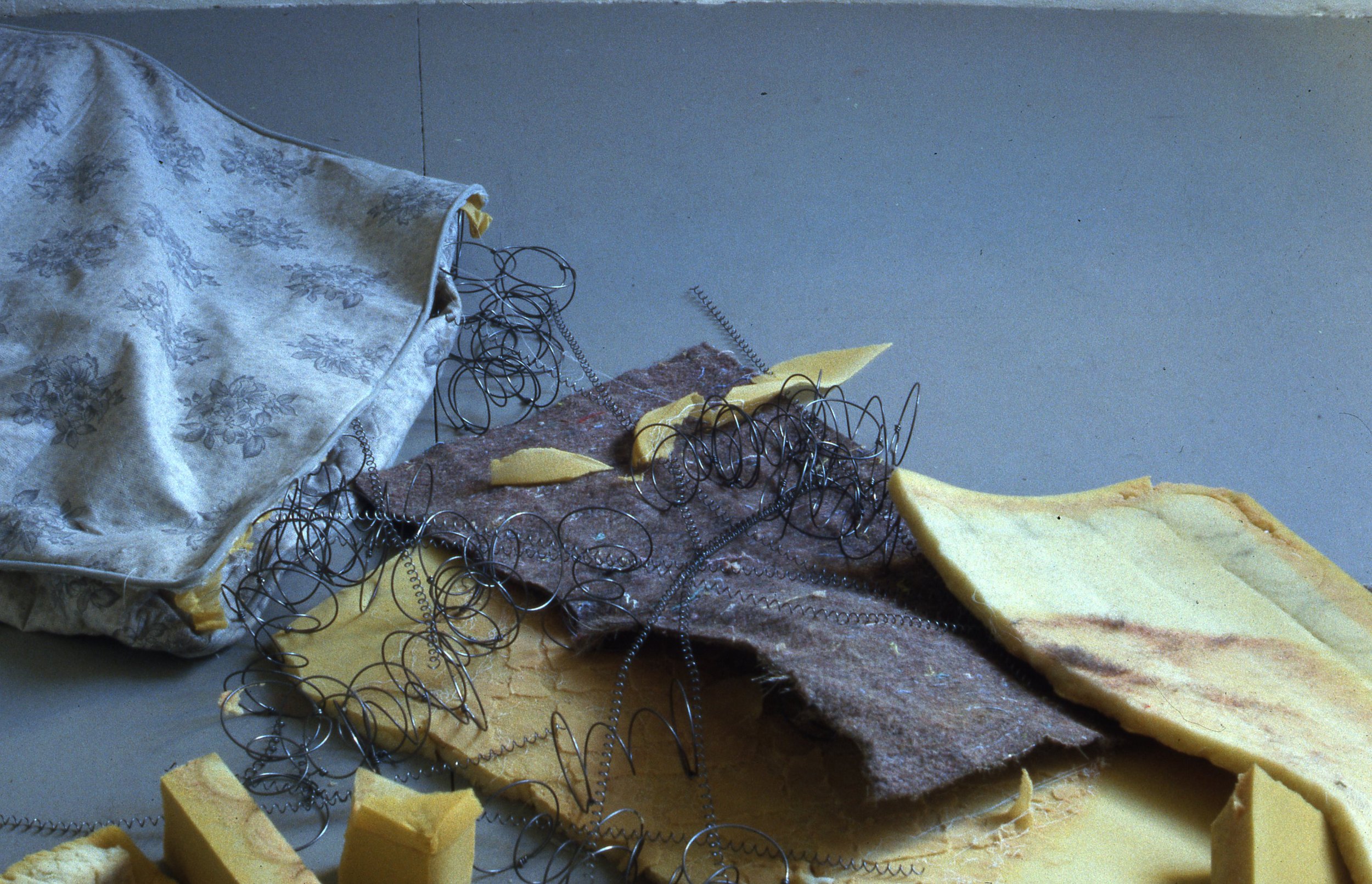
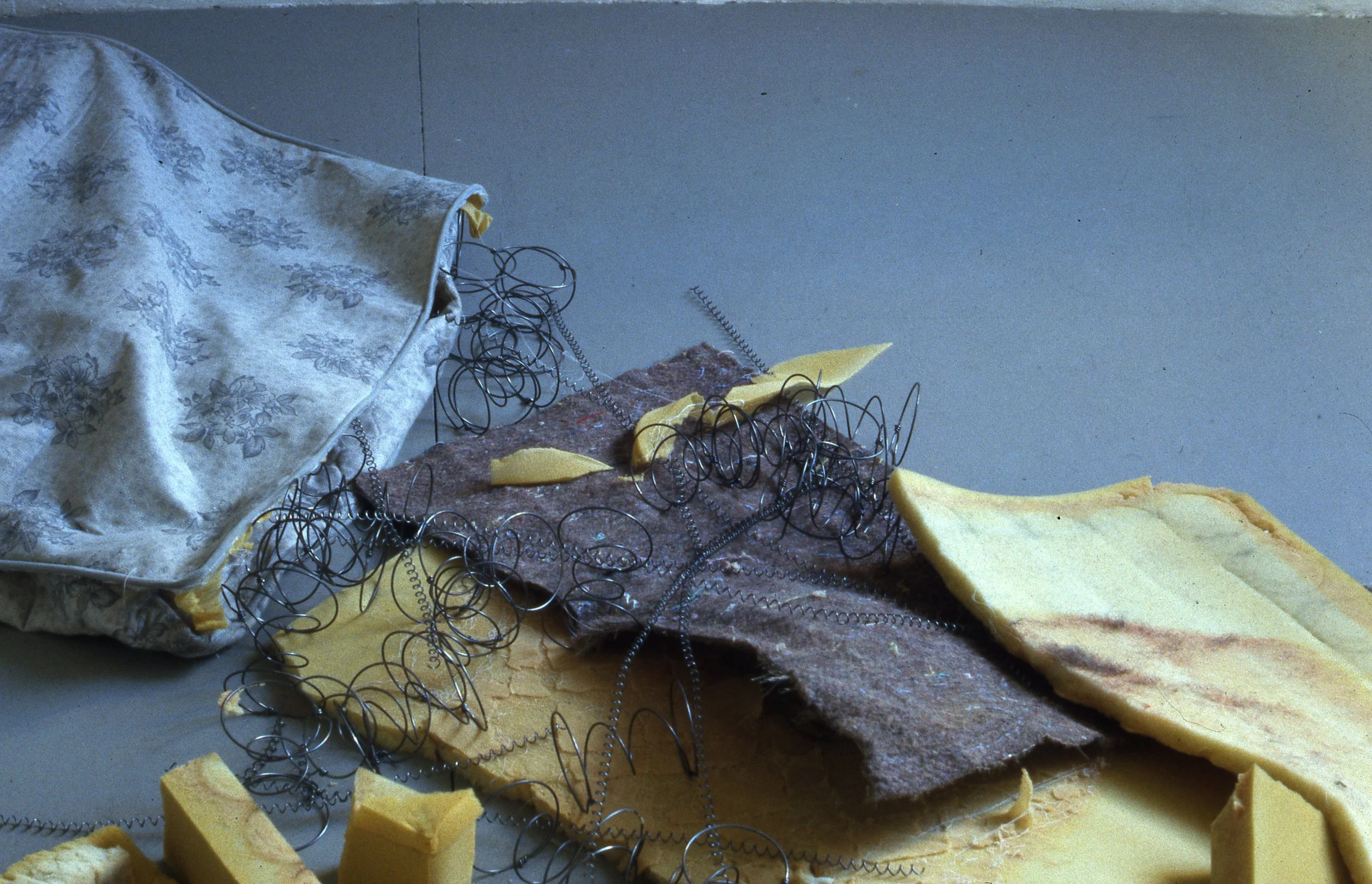
A second piece consisted of the complete disassembly of a La-Z-Boy chair that we had sourced locally in Newcastle. Spread across the floor, the work presented the chair reduced to its constituent parts — timber, upholstery, springs, fabric and mechanisms. At that time I was increasingly interested in how objects were constructed and how dismantling them could reveal hidden structures and histories. This line of enquiry continued into other projects I later developed, including work made in Barcelona during the same period.
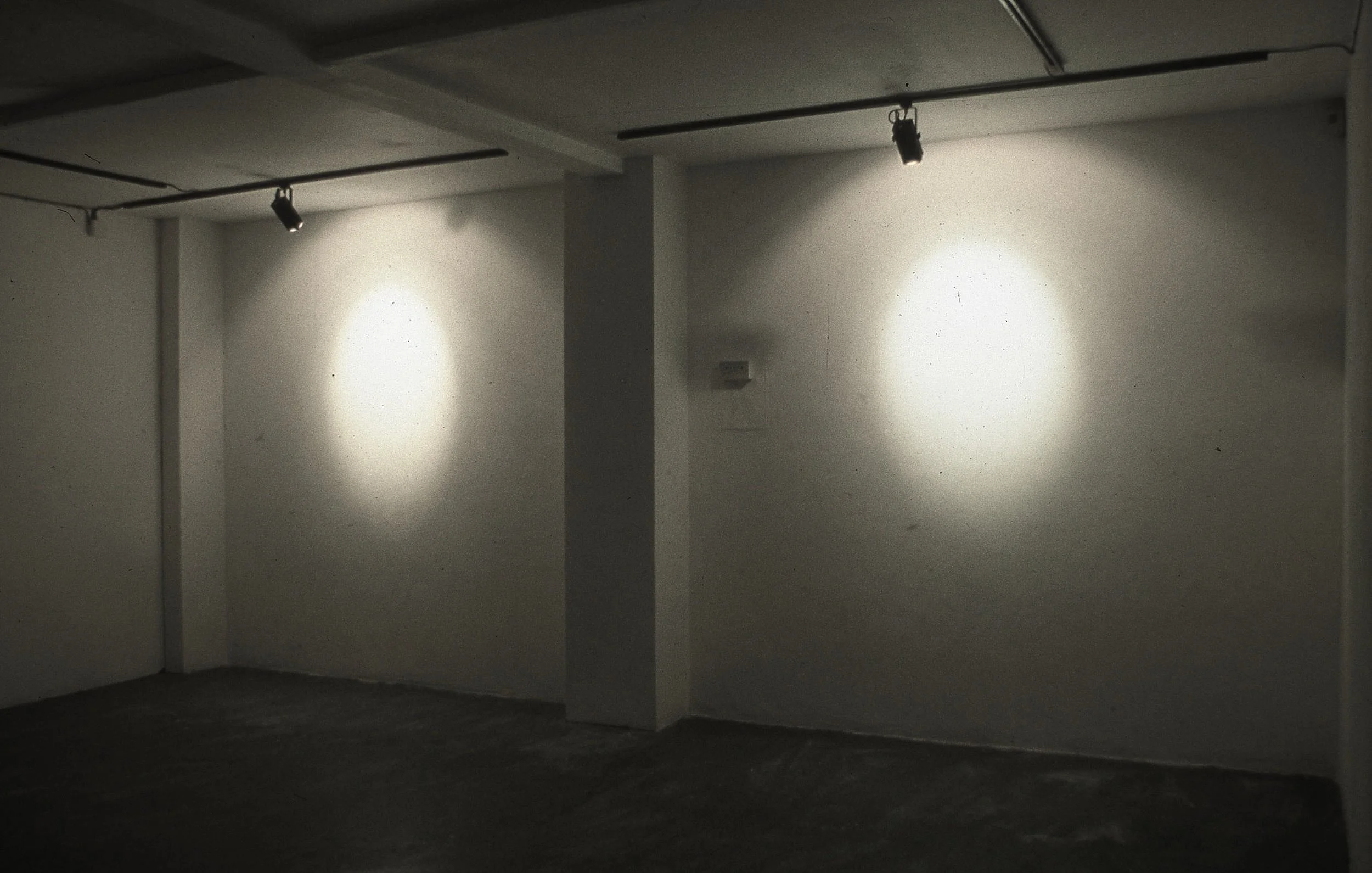
Another installation responded directly to one of the gallery spaces, which had uneven, imperfect walls with a slightly bubbled surface. Two spotlights illuminated part of the wall, creating warm areas of yellow-white light. I became interested in the contrast between the poor quality of the wall itself and the idealised effect produced by the lighting.
Working with assistants, I carefully treated only the illuminated sections of the wall. Using layers of plaster and repeated sanding, we transformed those areas into surfaces as smooth and refined as possible. The result was that the spotlight appeared to fall onto an almost immaculate section of wall, while the surrounding surface retained all of its flaws and irregularities.
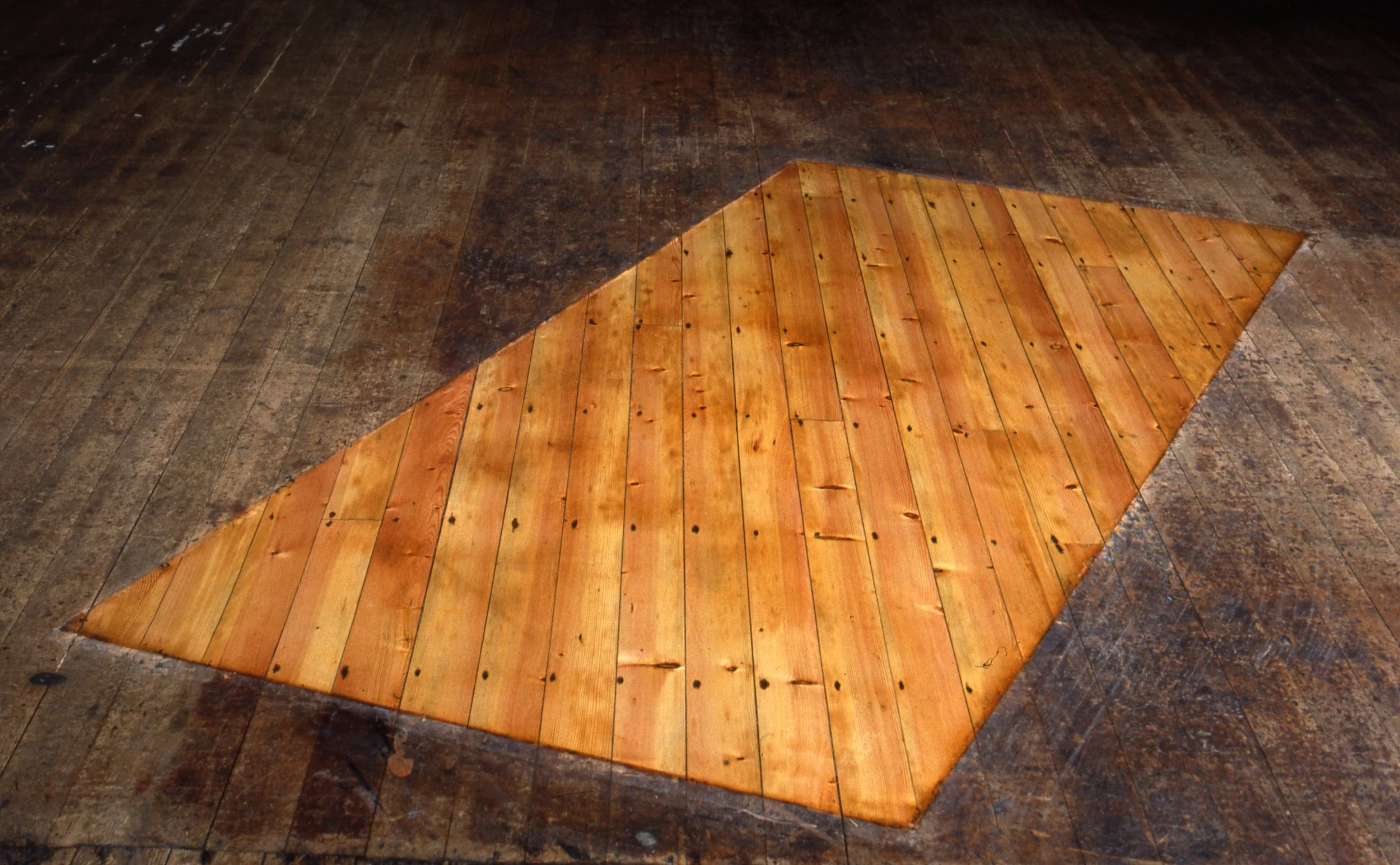
At the Buddle Arts Centre I produced another site-responsive work using the building’s wooden floor. The floor itself was beautifully worn and highly polished through years of use. Into this surface I marked out a large oblong form. Within that defined area, we sanded and refinished the wood repeatedly, treating it almost like a piece of fine furniture. As with the spotlight piece, the work focused attention onto one heightened, immaculate area within an otherwise ordinary architectural setting.
I spent two or three weeks in Newcastle during the installation period, staying locally while working across several different spaces. It was an important experience, allowing me to develop multiple works simultaneously within a single project.
The name “Wallsend” itself also stayed with me. I was struck by the poetic implication of the word — the imagined “end of walls.” That association became another reason for the decisions I made around the wall-cutting piece and the broader themes of the exhibition.