In the summer of 1996 I was working on two projects simultaneously. One was at the Museum of Modern Art in Oxford, and the other was in Germany, in Darmstadt, for an exhibition called Fallout. Unusually for me at that time, I was travelling constantly between Germany and the UK while trying to complete both works.
The exhibition in Darmstadt was a group show that included artists such as Graham Fagen, Douglas Gordon and David Shrigley. It took place at Wacker Kunst, an old factory space just outside the city. During the installation period I stayed in a local apartment nearby.
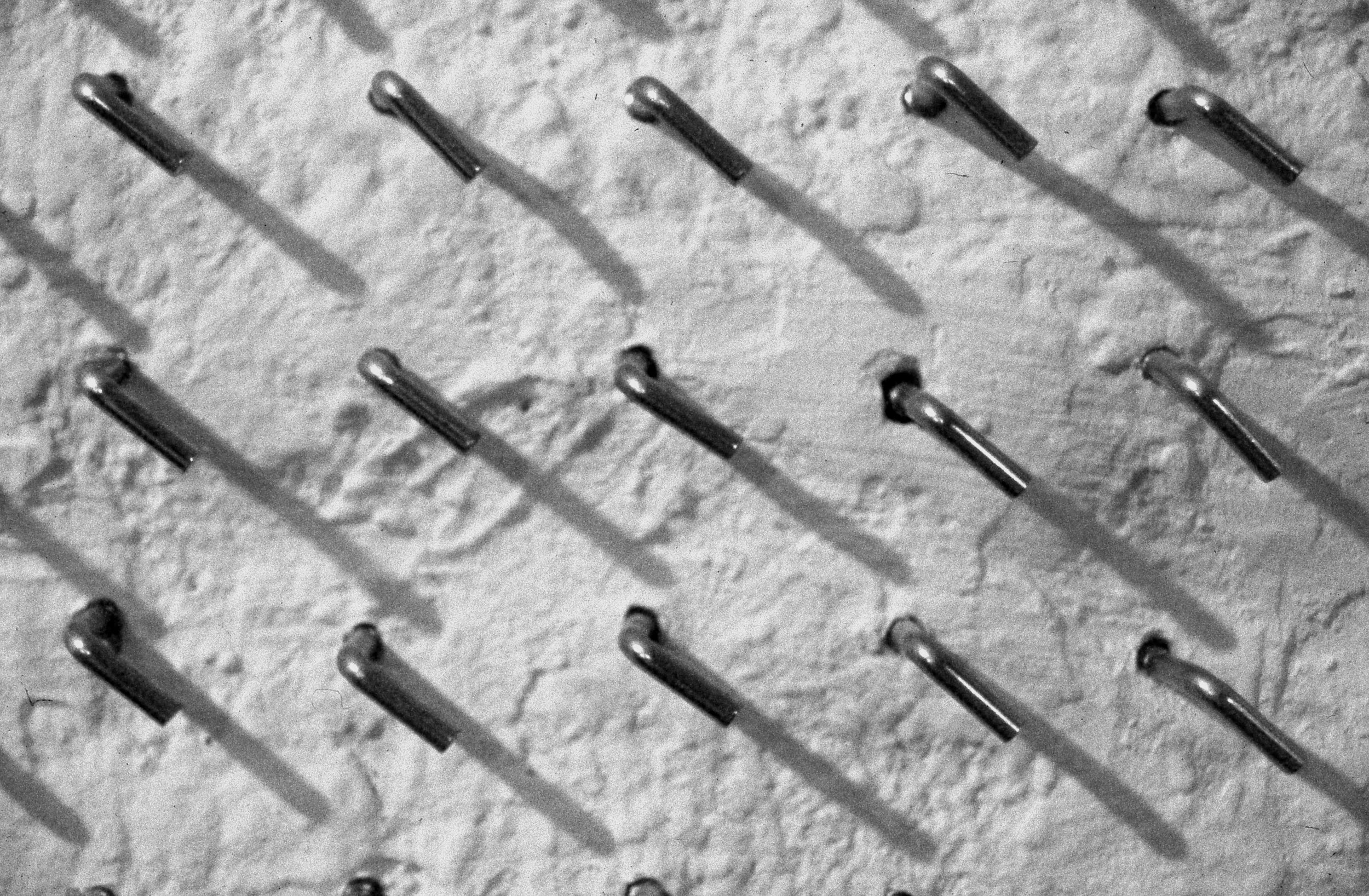
For the German project I produced an audio work centred around the idea of dust. Meanwhile, in Oxford, I was developing an installation using metal hooks, extending ideas from earlier projects in Barcelona and at the Catto Gallery, where the work involved intervening in the space itself rather than removing material from it.
The hooks had originally come from a previous exhibition in Barcelona. They were unusual objects — angular, industrial-looking forms that immediately interested me. I only had a small number of the original hooks, nowhere near enough to complete the installation. During one of my trips back to the UK I searched extensively for similar replacements but could not find anything close.
Eventually I contacted a friend in Barcelona and asked them to return to the original hardware shop where I had bought the hooks. They purchased more and posted them over to England, which added a certain amount of drama and uncertainty to the production of the work.
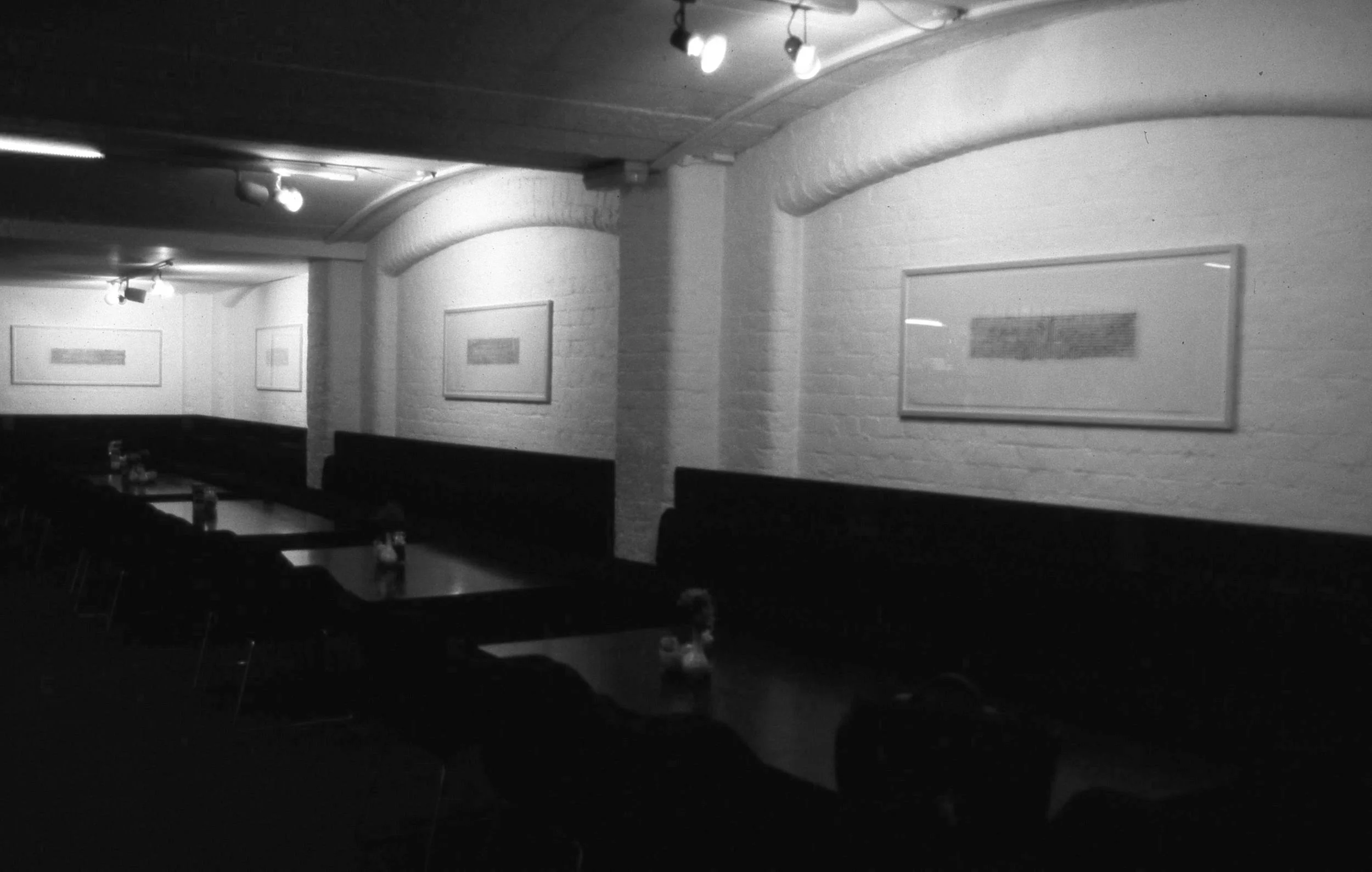
Because of the constant travelling between Germany and Oxford, I often had to work through the night on the installation. The hook piece occupied the lower gallery space, accompanied by a series of framed drawings related to the work, installed in what was effectively the museum café area on the first floor.
Above this, in the main galleries, there was a major exhibition by Carl Andre called Works on Paper. I had admired Andre’s work for many years, so encountering him repeatedly during the installation process was memorable. What struck me most was that every time we met, it seemed to be for the first time again. I must have encountered him a dozen times over the course of the installation, but he never appeared to remember me from one day to the next.
Despite that, I found our conversations fascinating. We spoke occasionally about presentation, installation, and the conditions under which he preferred his work to be seen. At that stage in my own development as an artist, those exchanges felt important.
There was a dinner after the opening attended by artists, curators and gallery representatives. I was around forty years old at the time, and I remember someone associated with Andre’s gallery reacting to my age with visible surprise, as though my career should already have passed its peak.
That attitude seemed very characteristic of the mid-1990s art world. The rise of the YBAs had created an obsession with youth and novelty, and by forty it could feel as though you were already considered finished. I am now in my seventies and, in some ways, still moving over that same hill — although perhaps running out of road.