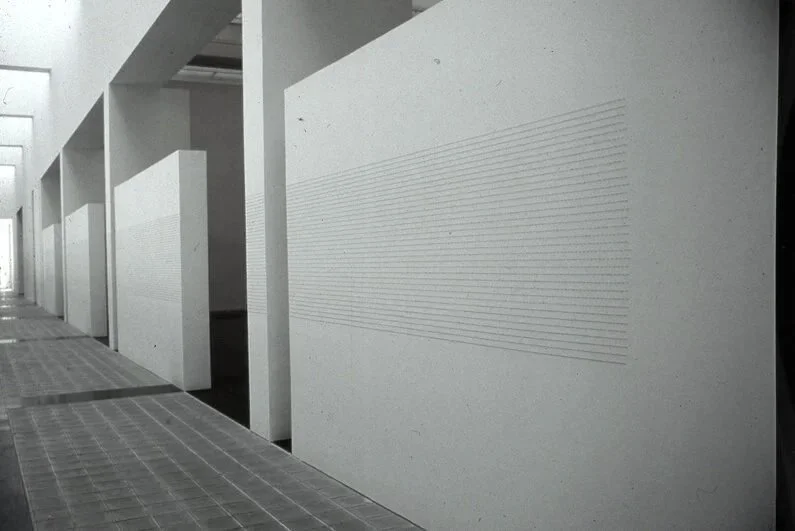
In 1996 I was invited by Antonia Maria Perello, head curator at the Museu d’Art Contemporani de Barcelona (MACBA), to participate in the exhibition Miradas. The exhibition included artists such as Tadashi Kawamata, Richard Wilson and many others.
Following a site visit to Barcelona, I decided to create two architectural interventions within the museum itself.
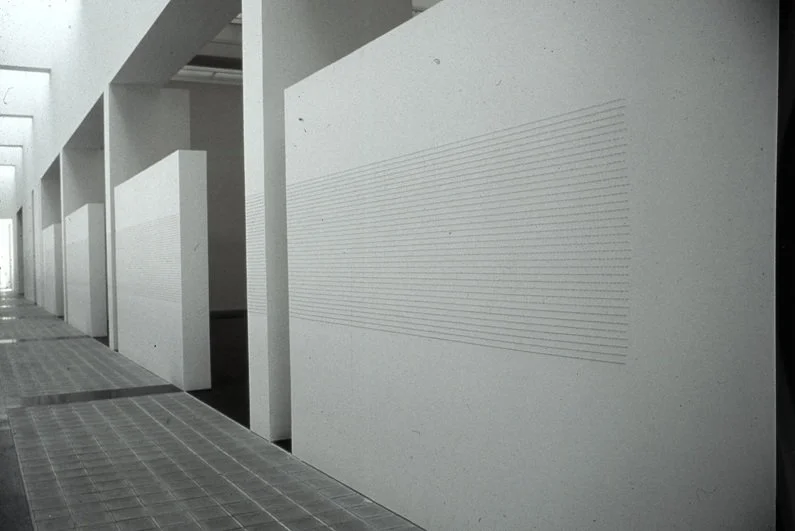
MACBA, designed by the American architect Richard Meier, immediately presented both problems and possibilities. When I first encountered the building empty, it already felt visually overcrowded by its own architecture. Even the gallery spaces seemed dominated by the structure itself. Windows cut beneath walls and across exhibition areas, flooding the interior with intense Mediterranean sunlight. The entirely white exterior and interior surfaces amplified and reflected ambient light throughout the building, making it, in my view, an extremely difficult space in which to show paintings or many forms of contemporary art.
I never considered it a particularly successful museum design internally, but its architectural tensions offered strong possibilities for site-specific work that could challenge and destabilise the building itself.
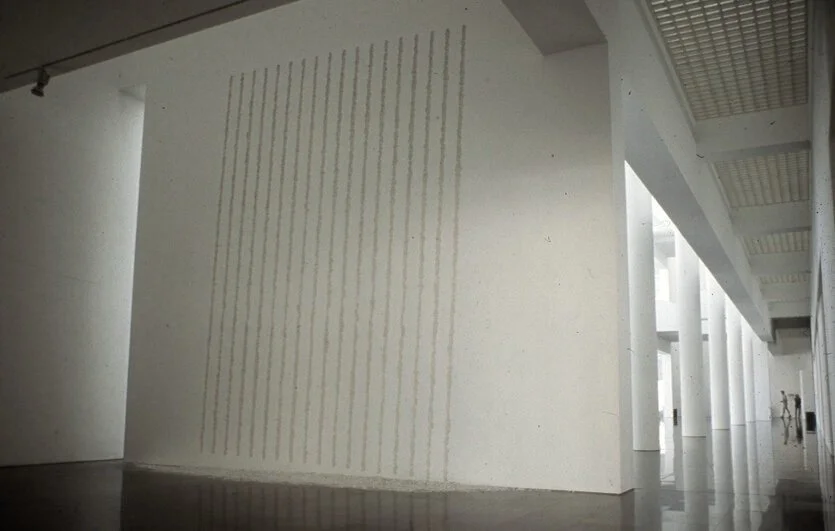
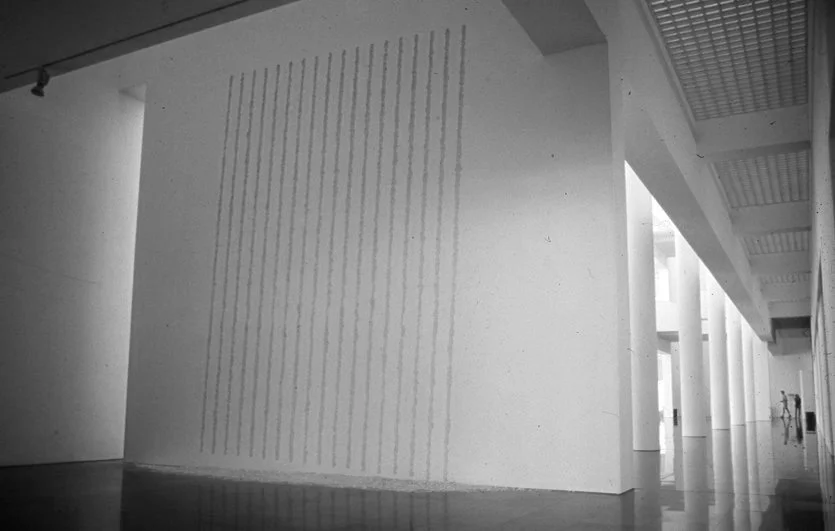
The first installation, Broken Line, developed directly from earlier staple works such as those made in London in 1995. The piece consisted of a large vertical rectangular form constructed from thousands of staples fired directly into the wall. Unlike the earlier works, however, the architecture continually interrupted and fragmented the image. It was almost as if the drawing existed before the building, with the architecture later cutting through and disrupting it.
The work eventually consisted of approximately 35,000 staples. For a short period I worked with assistants from a local art school, although many found the repetitive labour monotonous, and eventually I completed most of the installation myself. In many ways, that sustained repetition suited my temperament. The concentrated, methodical process became an important part of the work itself.
The second intervention, Skew (23°), occupied a large vertical wall at the rear of the museum’s central atrium. I wanted this work to engage directly with the physical structure of the building. The piece involved cutting deeply into the wall itself, creating a four-metre-high incision through the architectural surface.
At the time, the museum director strongly objected to several of the interventions being created for the exhibition because many of the artists were, in effect, physically dismantling or disrupting the museum space. Antonio Perella fought hard to ensure these works could proceed.
As with all of my architectural interventions, the debris removed from the wall was an essential part of the work. I insisted that the material excavated during the cutting process remain on the floor beneath the piece. Museums and galleries often wanted to clean or remove this debris, treating it as construction waste rather than part of the installation itself, but for me the work was always both the cut and the displaced material together.
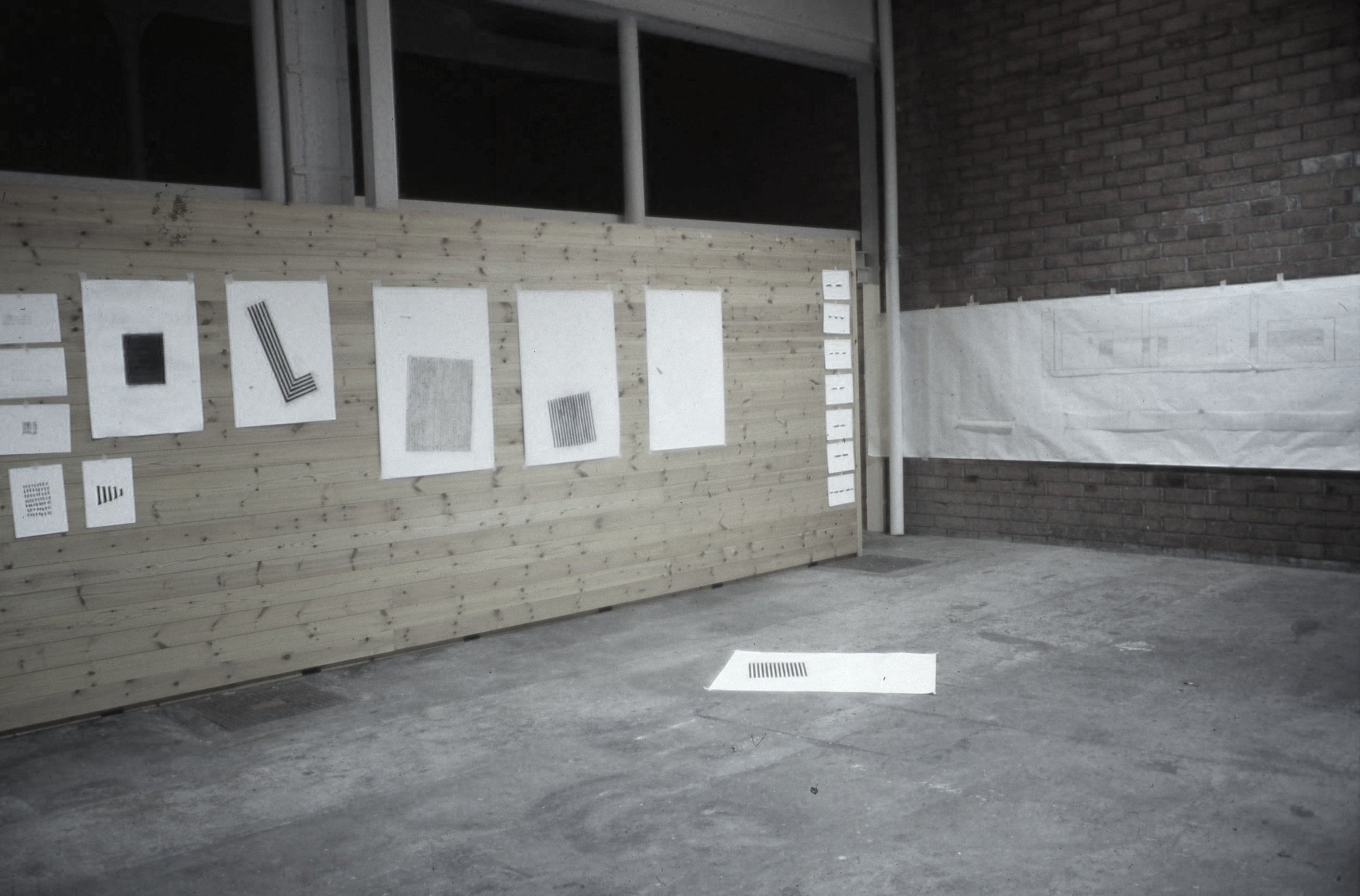
I spent five weeks in Barcelona developing the project. Initially I worked from a temporary studio inside the museum before moving to a nearby external studio space. During this period I produced preparatory drawings and plans before beginning the physical interventions. The actual cutting into the building took place gradually as the other artists’ projects throughout the exhibition also began to emerge and transform the museum space.